
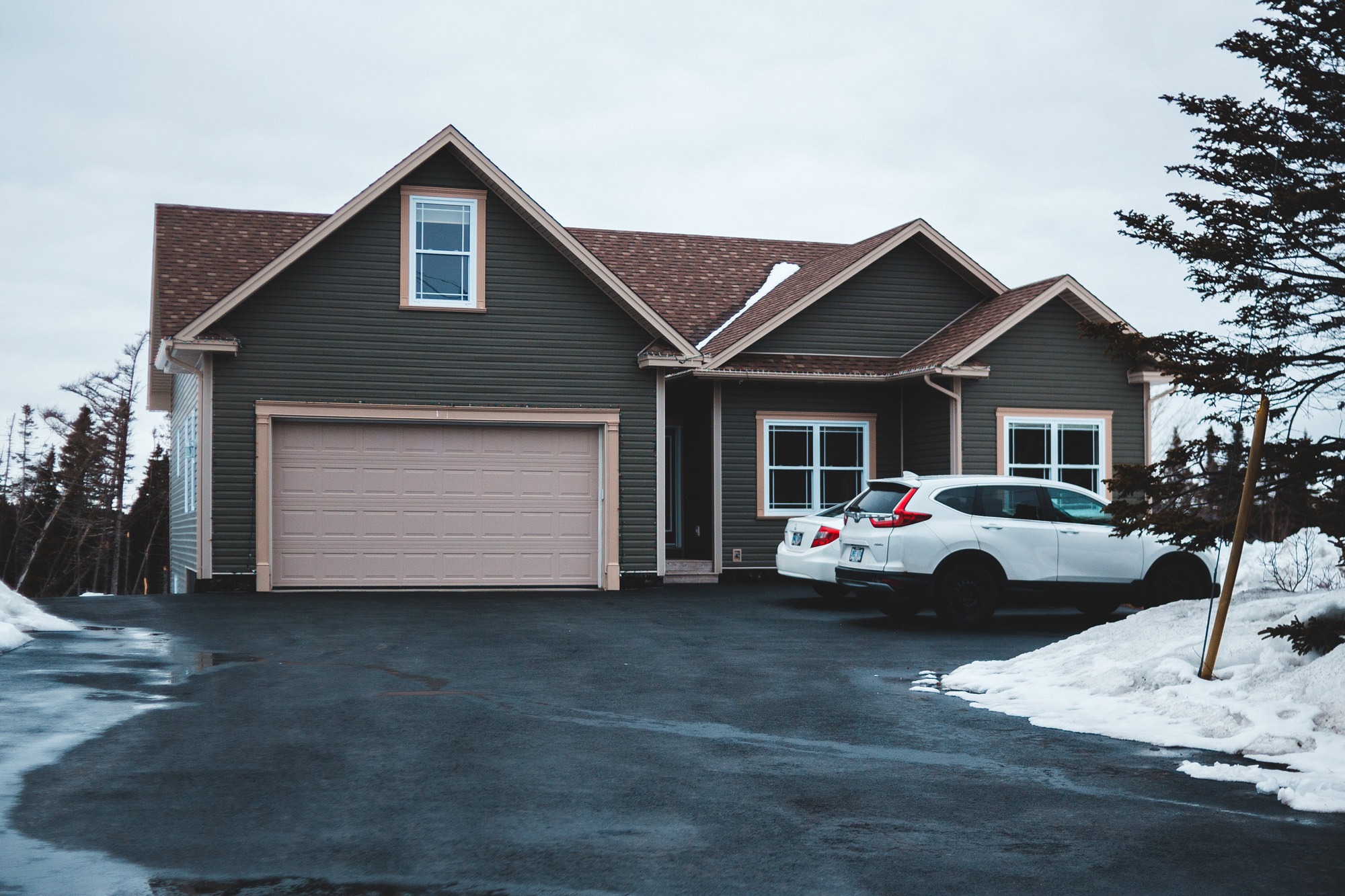
Every spring, after the snow retreats and Minneapolis homes emerge from another brutal winter, homeowners walk their property perimeter and notice the same thing: the exterior looks rough. Paint is peeling, wood looks gray and weathered, there’s discoloration around window frames, and maybe a soft spot or two near the foundation. The instinctive response is to call a painter and get the house repainted before summer. Sometimes that’s exactly the right call. But sometimes, what looks like a paint problem is actually the exterior surface communicating something far more serious happening underneath — and painting over it doesn’t solve the problem. It conceals it until it becomes significantly more expensive to fix.
Learning to distinguish between paint failure that is simply cosmetic and paint failure that is symptomatic of substrate damage, moisture intrusion, or structural compromise is one of the most practically valuable skills a Minneapolis homeowner can develop. It determines whether your painting project is an investment that protects your home or a cosmetic layer applied over a problem that will force you to do the work twice.
What Healthy Paint Failure Actually Looks Like
Paint failure has a normal, expected form, and understanding what that looks like helps identify when failure is departing from the expected pattern into something more concerning. Paint that has reached the end of its service life typically shows chalking — a powdery residue on the surface when you run a hand across it — along with fading, mild cracking that follows no particular pattern, and gradual loss of adhesion that produces peeling in relatively small, scattered flakes across the entire painted surface. This kind of uniform, distributed deterioration is what happens when UV radiation and weathering have broken down the binder in the paint film over years of exposure. It’s a maintenance issue, not a structural one, and repainting after proper surface preparation will address it completely.
The distress patterns that warrant concern are fundamentally different in both character and location. They tend to be concentrated rather than distributed, associated with specific building features rather than spread across the entire surface, and often accompanied by physical changes to the substrate beneath the paint — softness, swelling, staining, or odor — that indicate something is happening to the material itself rather than just its coating.
Peeling Concentrated at Specific Locations: The Moisture Map
When peeling is heavily concentrated around windows, doors, roof penetrations, or the base of walls rather than distributed across the whole surface, the pattern is telling you something precise: water is entering the building envelope at or near those locations and migrating to the surface, where it breaks the adhesion bond between paint and substrate from behind. This is called moisture-driven peeling, and it is categorically different from weathering-driven peeling because the source of the problem is water movement, not paint age.
In Minneapolis homes, the most common sources of this moisture are window and door flashing failures, where the metal or membrane that diverts water away from the frame has corroded, separated, or was never properly installed. Ice damming is another significant contributor — when ice accumulates at the roof edge during freeze-thaw cycles and meltwater backs up under shingles, it can find its way into wall cavities and migrate down to manifest as peeling paint on siding several feet below the roofline. If you’re seeing concentrated peeling in a horizontal band on an exterior wall and the band aligns with the bottom of your roof, ice dam intrusion should be at the top of your diagnostic list, and a roofer or building envelope specialist needs to assess the situation before any painter touches the surface.
Soft, Spongy, or Visibly Deteriorated Wood: The Point of No Return
Press a screwdriver or a firm finger into areas where paint is peeling. If the wood beneath feels firm and solid, the substrate is intact and the problem is confined to the coating. If the wood compresses under light pressure, crumbles at the edges, or has a spongy, stringy texture, you’re dealing with wood rot — fungal decay that has broken down the cellular structure of the wood itself. Rot is not a painting problem. No primer, paint, or surface treatment will reverse or stabilize rot. The affected wood needs to be removed and replaced before any coating is applied, because paint over rotted wood will fail again within a single season regardless of product quality or application technique.
The locations most vulnerable to rot on Minneapolis homes are the bottoms of trim boards where they make contact with siding or sit close to grade, windowsill ends where end grain is exposed to weather, the bases of porch columns, and any horizontal surface where water can pool rather than drain. These are the locations to probe first during any pre-painting assessment. Rot that is caught early, when it affects only the outermost inch or two of a board, can often be addressed with a limited repair. Rot that has been concealed under paint for multiple cycles — which happens when exterior surfaces are repeatedly painted without adequate inspection — can penetrate deeply enough to affect structural framing members, at which point the scope and cost of remediation changes dramatically.
Staining Patterns That Point to Water Sources
Dark staining — brown, rust-colored, or black — on exterior surfaces beneath paint that has lifted or through paint that is still adhered tells a story about where water is traveling through the building envelope. Rust-colored streaks running vertically from metal fasteners indicate that nails or screws are oxidizing from sustained moisture contact, which means the wood they’re fastened through is staying wet longer than it should. This can indicate a drainage plane failure behind the siding, where water that gets behind the cladding has no path to escape and is instead saturating the sheathing and framing.
Black staining with a fuzzy or irregular edge is often mold or mildew growing on the surface, which can sometimes be addressed with cleaning and antimicrobial treatment prior to painting. But when black staining is concentrated at the base of walls, around foundation transitions, or in corners where two surfaces meet, it frequently indicates chronic moisture accumulation at that location — a condition that painting will not resolve and that left unaddressed will eventually produce rot and potentially affect indoor air quality.
Bubbling Paint: Pressure from Behind
Bubbles in exterior paint — distinct from large peeling sheets — indicate that something beneath the film is generating vapor pressure that is pushing the paint away from the surface. In Minneapolis, this is particularly common on south- and west-facing walls of homes where the sun rapidly heats the exterior surface after morning dew or rain, converting surface moisture to vapor before it can escape through the paint film. This can be a paint-selection or application issue on an otherwise sound substrate, addressable by proper preparation and the use of a breathable primer system.
However, bubbling that persists through dry weather, appears on north-facing walls, or recurs quickly after repainting almost always indicates that moisture is migrating from inside the wall cavity to the exterior surface through vapor pressure. This pattern points to insulation, vapor barrier, or interior humidity management issues — none of which painting addresses. Homes in Minneapolis neighborhoods with older construction and minimal insulation are particularly susceptible to this because the thermal envelope doesn’t prevent interior moisture-laden air from reaching the cold exterior sheathing during winter, where it condenses and then migrates outward as the season transitions.
The Siding Material Changes the Diagnostic Entirely
The substrate beneath the paint determines how distress signals should be interpreted. On original wood siding common in Minneapolis’s older neighborhoods — Seward, Northeast, Linden Hills, and surrounding areas — rot and moisture intrusion are the primary concerns. On fiber cement siding, which doesn’t rot, the concern shifts to joint sealant failure, improper bottom-edge cuts that allow moisture into the board core, and fastener corrosion. On older homes with lead-based paint under current coatings, deterioration creates a hazmat consideration that requires proper assessment and containment protocols before any surface work begins. Federal law requires disclosure and specific practices for pre-1978 homes, and a contractor working on Minneapolis homes of that era should be EPA RRP certified.
Stucco exteriors present a particularly layered diagnostic challenge. Paint failure on stucco is often the first visible sign of stucco system failure — cracking in the scratch coat, delamination of the finish coat from the base, or water infiltration through cracks that have allowed the substrate behind the stucco to become saturated. Painting over stucco that has systemic cracking or delamination traps water that has already entered rather than excluding new water, and the result is accelerated deterioration of both the stucco system and the framing behind it.
What a Pre-Painting Exterior Assessment Should Cover
A thorough assessment before committing to an exterior painting project should include probing all trim boards and siding at their most vulnerable locations, checking all window and door perimeters for sealant integrity and flashing condition, observing the roof edge and soffit condition for evidence of ice dam damage or ventilation failure, and reviewing the foundation transition where siding approaches grade. This assessment determines whether what you’re looking at is a painting project, a carpentry and painting project, or a situation that requires a building envelope specialist before a painter should be involved at all.
When You Need a Painter Who Looks Before They Quote
The difference between a painting estimate that accounts for what’s actually happening on your home’s exterior and one that simply prices the square footage is the difference between a project that solves the problem and one that creates a more expensive version of it eighteen months from now. At Headwaters Painting, we serve Minneapolis homeowners throughout Northeast Minneapolis, Linden Hills, Seward, and the broader Twin Cities metro — including Roseville, Arden Hills, Falcon Heights, and St. Anthony — and we approach every exterior project with the understanding that the coating is only as sound as what it’s protecting. If your home’s exterior is showing signs of distress and you want a thorough, honest assessment of what it actually needs, reach out to us today to schedule your free estimate. We’ll tell you what we see — and we’ll make sure the project we propose actually addresses it.